 Incredibly honored that the good folks at NonBinary Review have nominated my poem “listen” for a Best of the Net Award. Read more here.
Interview with the BBC
The lovely Bola Mosuro interviewed me for the BBC about writing and life. Listen on the BBC website.
My new chapbook Movement No. 1: Trains is out now! Order here.
Many thanks to the amazing Kristy Bowen, publisher of dancing girl press.
 The lovely Chioma Nkemdilim interviewed me for theThe African Book Review.
ABR: How did you develop an interest in writing poetry and where does your inspiration to write poems come from?
 WABUKE: Poetry was my first love, but it took me a long, circular time to be strong in the work. I wrote my first poem when I was six. It was about an elephant named Elephy. More followed. Poetry was a sort of sanctuary for me. In my education, from kindergarten through senior year of high school, we only read white European and American writers, usually male, and finding Brooks and Giovanni and Lorde and Baldwin and Hughes and others gave me something that sustained me. I have played music for most of my whole life, and I was always attracted to the musicality of language. But I studied film and fiction writing in college and graduate school instead. The idea that you could get an MFA in poetry was beyond my comprehension at the time.
A few years ago, I returned to Los Angeles to spend time with my parents, who were both ill, and with my grandmother, visiting from Uganda. My grandmother was 96; I knew that might be the last time I saw her. I became pregnant and began to think even more about my body family—the growing of life brought up so many feelings and memories; it was a paradigm shift too, in terms of what I thought important, in my writing. My baby boy is probably my biggest inspiration. He opens up my world and makes it so much richer, so much more interesting and meaningful than I could have ever thought possible.
Read the rest of the interview here.
The lovely Geosi interviewed me for his book blog here.
Interview with 2015 Brunel University African Poetry Prize Shortlisted Writer
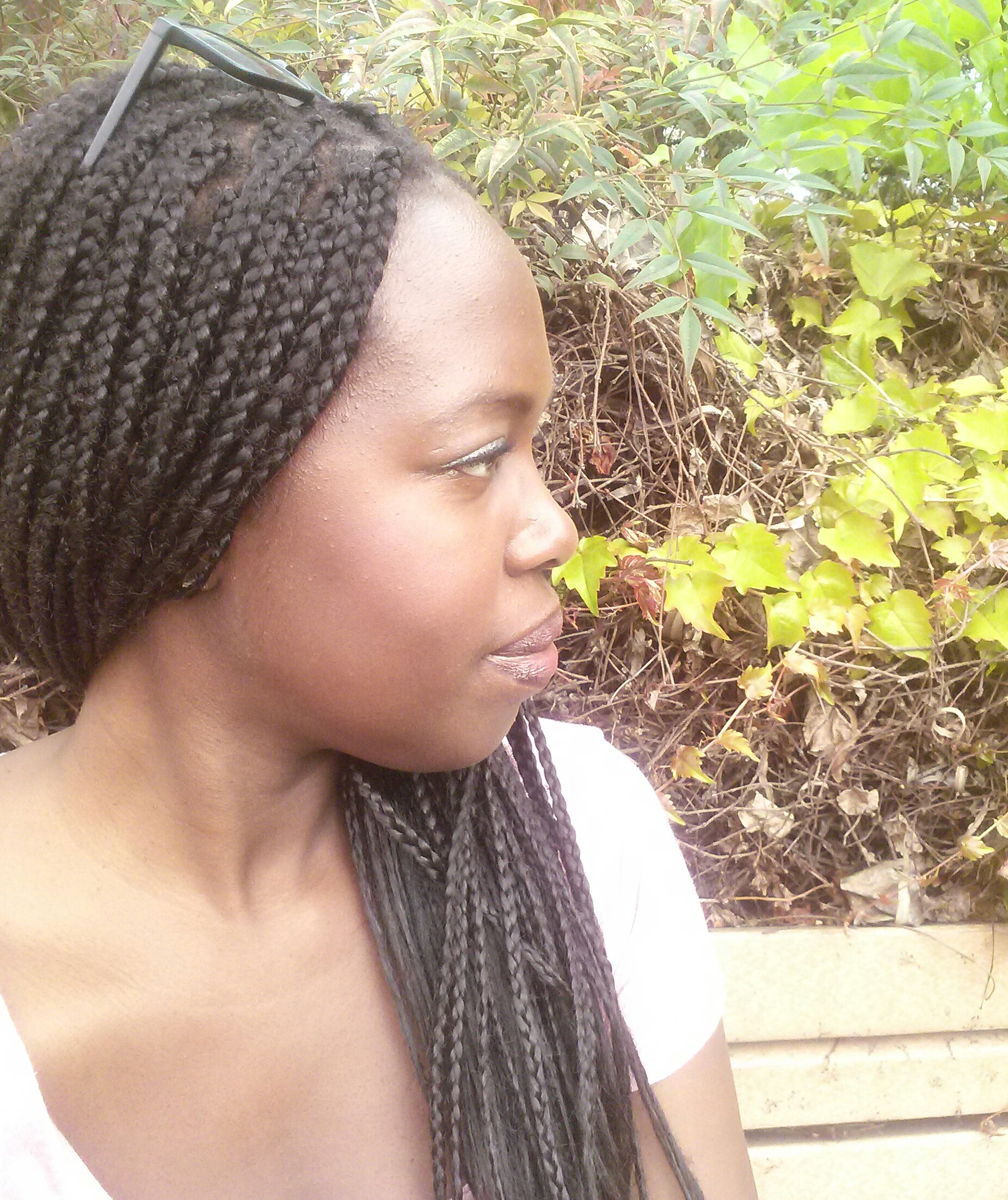
Brief Biography:
Born in exile to Ugandan refugees, Hope Wabuke is now a writer based in Southern California. Her poetry has appeared or is forthcoming in The North American Review, Kalyani Magazine, Fjords Literary Journal, Potluck Magazine, Ruminate Magazine, Salamander Journal, Literary Mama, Weave Magazine, Cease Cows, Split This Rock and Joint Literary. Her essays and criticism have been featured in the Los Angeles Review of Books, Salon, Gawker, The Root, Ms. Magazine, Los Angeles Magazine, The Feminist Wire, Ozy, The Hairpin and The Daily Beast. Hope reviews books for the Kirkus Reviews and has won fellowships from The New York Times, Voices of Our Nations Foundation (VONA), and the Barbara Deming Memorial Fund for Women Writers. She holds degrees from Northwestern University and New York University. Hope is currently the media director for the Kimbilio Center for African American Fiction. Follow her on Twitter @HopeWabuke.
Geosi Gyasi: Could we start with your poem, “Leviticus”? How did you come to write it?
Hope Wabuke: When I became pregnant with my baby boy, I began to think a lot about my personal and cultural history. I thought a lot about my parents, my grandparents–what it must have been like to be live through genocide, trying to keep your family safe. I began to remember things–some I think I had been told, some I don’t think I could possibly have known. When I talked to my mother, afterward, she said she hadn’t told them to me. Nor, of course, had my father. It was all very interesting to me, very pressing to understand. Scientists have proven that, when women are pregnant, the baby’s cells migrate into the mother’s blood, body and brain, and vice versa of course, permanently changing our bodies and psychology. So my mother’s experiences and unsaid memories were held inside me; my son’s as well. Mine inside him. It was then that I began to write the poems that form my current poetry manuscript, The Body Family, of which “Leviticus” is one. These poems explore my family’s escape from Idi Amin’s Ugandan genocide and the aftermath of healing in America. In it, I reclaim my womanhood, culture, and spirituality from a legacy of violence.
Read the rest of the interview here.
Brunel University Poetry Prize
 How lovely to be shortlisted for the Brunel University Poetry Prize along with five other amazing poets! The African Book Fund is doing amazing work. Find more information about the prize and the other shortlisted poets here.
october
september

and the girls are still out,
the boys are still watching; one
last gasp before fall’s hiding
august
summer’s end settles
into small new beginnings
of growth of dream; life.

